





Understand the Types of Stage Curtains: A Complete Guide
Do you remember the last time you saw a school play, a concert, or a show in a theater? Perhaps the curtain was the first thing you looked at.
But the front curtain is only one part of the staging. Other curtains hide lights and equipment, obscure backstage areas or help set a scene. The types of stage curtains you need depend on how the space is used and what you want the audience to see.
If you are choosing curtains for an auditorium, church, theater, or event space, it helps to know what each type does before you order.
Why stage curtains matter
Before we dive into the specifics of what are the different types of stage curtains, let's appreciate their collective importance. Stage curtains have both practical and visual jobs. They can hide the wings, provide a waiting place for performers and keep equipment out of sight.
Some help control unwanted light, others work with stage lighting to get a certain effect. A curtain that suits a school assembly may not be right for a theater production, so start with the needs of your venue.
What are the different types of stage curtains
1. Main stage curtains
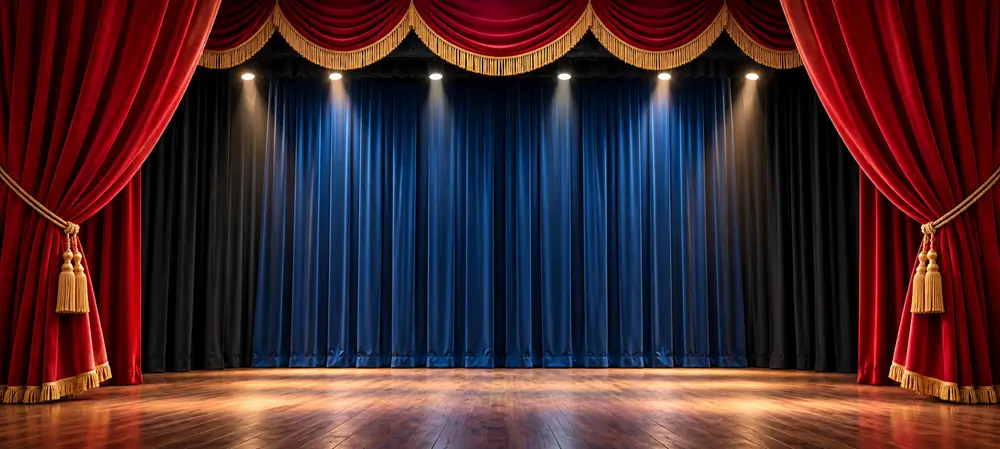
The main curtain is the big curtain at the front of a stage. It divides the stage from the audience and normally opens at the start of a performance. It may also close in between acts or at the end of a show.
You may have seen the traditional red curtains in theaters, but stage curtains are available in different colors and styles. The proper choice depends upon the look of the venue, and on how often the curtain is used.
Saaria offers a range of stage curtains for different venues, including schools, churches, auditoriums, and performance spaces.
2. Traveler curtains
Traveler curtains move sideways along a track. Some split in the middle and draw toward each side; others move in one direction. They are useful when a venue needs to open and close the stage without lifting the curtain overhead.
Check the width of the stage opening and make sure there is room for the curtain to stack at the sides. The track and operating system must also suit the curtain's size and weight.
3. Fire curtains
A fire curtain is a safety system, not simply a regular stage curtain made from heavy fabric. Where required, it is designed to close across an opening as part of the building's fire-safety plan. Its design, controls, installation, and inspection may be governed by local rules.
If your project needs a fire curtain, work with qualified professionals and confirm the relevant code and product documentation. Ordinary fire-retardant stage curtains are designed for a different purpose and should not be treated as a substitute for a required fire curtain system.
4. Austrian or festoon curtains
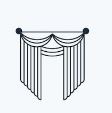
Austrian curtains have gathered fabric that creates soft, curved folds. They are chosen when the curtain itself is part of the stage design, such as in an auditorium, church, or performance hall.
Because the fabric gathers as it moves, the lifting arrangement and space above the stage need careful planning. Ask whether the operating system can support the finished curtain's weight.
5. Stage masking curtains
Stage masking curtains keep backstage activity out of sight. Two common parts are legs and borders. Legs are tall, narrow curtains at the sides of the stage; borders are wider curtains hung across the top. They hide the wings, lights, and other equipment while giving performers space to enter and exit without being seen too early.
6. Backdrop curtains
A backdrop is hung behind the main performance area to create a background for the stage. A simple one may be needed for speeches, school ceremonies or presentations while a show or event may need a specific color or finish.
See if the background remains the same or changes for different events. Determine the size of the area to be covered and think about the appearance of the fabric under the lighting of the venue.
Explore Saaria's custom stage backdrop curtains to compare options for different stage sizes and applications.
7. Cyclorama curtains
A cyclorama, often called a cyc, is a large curtain or surface usually placed at the back of a stage. It is commonly used with stage lighting to create different backgrounds.
For example, lighting can make a light-colored cyclorama appear blue for a sky effect or change its appearance to suit a particular scene. This makes it useful for theater productions, dance performances, and other shows that rely on lighting effects.
A cyclorama is different from a regular decorative backdrop. Its surface needs to work with the lighting design, so fabric texture, seams, and how evenly the curtain hangs all matter.
Not every venue needs a cyclorama. If your stage mainly hosts speeches, presentations, or school assemblies, a standard backdrop may be sufficient. For more specialized visual or acoustic applications, explore stage and theater backdrop options.
8. Scrim curtains
A scrim is made from open-weave fabric that can look solid or see-through depending on the lighting. Light the front and it can appear opaque; keep the front darker and light the space behind it, and performers or objects may become visible.
This effect can be used for shadows, reveals, and scene changes. A scrim works best when the production's lighting plan is designed around it.
9. Blackout stage curtains
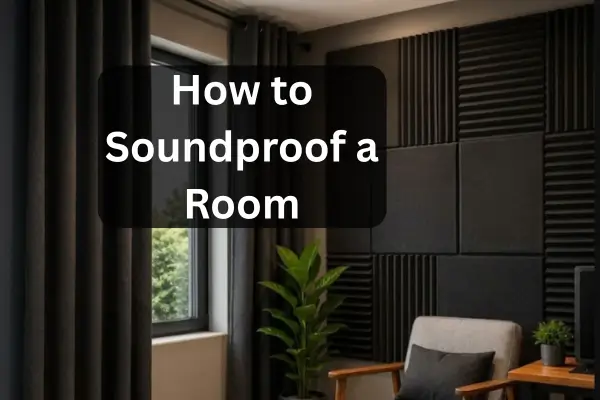
Blackout curtains are designed to block light. They can serve to darken a room or cut down on light coming through a covered area in an auditorium or studio.
They are different from masking curtains: masking is used mostly to cover backstage areas, while blackout performance is a matter of the fabric’s ability to block out the light. Some curtains will do both jobs – but first check the material and construction.
How to choose the right stage curtain
Once you understand the main stage curtain types, think about the room before deciding what to buy. Measure the stage opening, curtain height, and space available at the sides and above the stage.
Choose a fabric weight that suits the curtain's job and the track or rigging system. Consider how the venue is used, how often the curtain will move, and whether manual or motorized operation makes sense.
If light or sound control matters, ask whether a suitable lining is available. Also check the fire-safety requirements for your venue. Ask for the relevant product documentation rather than relying on a general description. A fire curtain and a flame-retardant curtain serve different purposes.
Explore stage curtains at Saaria
A school auditorium, church, theater, and event venue may all need a different setup. At Saaria, our stage curtain collection is a place to start comparing options for your space.
Have your measurements ready and think about how the curtain will be used, moved, and maintained before choosing a product.
Explore Saaria's stage curtain collection to find options for your venue