









How to Soundproof a Room?
Whether you live in a condo in Miami, an apartment in New York City, or a house on a busy street in Los Angeles, unwanted noise can quickly become frustrating. Traffic, construction, noisy neighbors, barking dogs, and everyday outdoor activity can make it difficult to relax, work from home, or get a good night's sleep.
When looking for a quieter home, many people start by searching for how to soundproof a room without taking on expensive renovations. Fortunately, there are practical ways to reduce noise without tearing down walls, replacing windows, or making major structural changes.
At Saaria, we have worked with homeowners, theatres, recording studios, schools, churches, and commercial facilities looking to improve sound control. One thing we consistently found is that windows and glass doors are often among the biggest paths through which unwanted noise enters a room.
So, for that soundproof curtains and acoustic curtains are often one of the most effective and affordable options to start.
In this blog, we will cover what soundproofing really means, why rooms become noisy, and how to make a room soundproof step by step.
What does soundproofing a room actually mean?
Many people assume soundproofing means making a room completely silent. But it's completely not what most homeowners want. Soundproofing is reducing the level of sound that enters or echoes within a room.
It can reduce traffic noise coming through a window, block street noise, talking sounds coming from neighbours or just want a peaceful bedroom or home office.
When people search for how to soundproof a room, they are usually looking for practical ways to reduce noise rather than achieve complete silence.
Why do rooms become noisy
It is obvious to first peek into the reason why sound is entering before learning to soundproof a room. Sound naturally travels through openings and hard surfaces. Common problem areas include:
Windows
Glass patio doors
Door gaps
Thin walls
Air vents
Floors and ceilings
In most homes and apartments, windows are often the weakest point. Glass does not block sound as effectively as many people think, which is why outdoor noise can easily make its way indoors.
This is especially common in urban areas where homes are exposed to traffic, public transportation, construction projects, and neighbourhood activity.
Why soundproof curtains are one of the easiest solutions
When you begin researching how to soundproof a room cheaply, then you often discover that structural renovations can be very expensive. Replacing windows, rebuilding walls, or installing specialized construction materials can cost thousands of dollars.
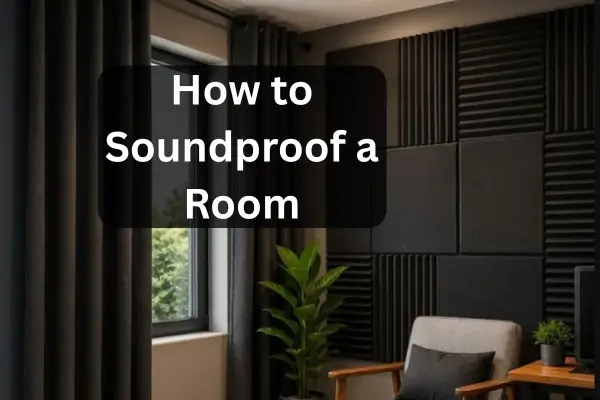
Sound-reducing curtains offer a simpler alternative. Unlike standard decorative curtains, soundproof curtains are designed with dense fabrics and multiple layers that help reduce sound transmission. They can also help absorb some sound reflections inside the room.
Some additional benefits include:
Improved privacy
Better light control
Increased comfort
Added insulation during Canadian winters
Easy installation
For many homeowners and renters, they provide one of the best combinations of affordability and effectiveness.
How soundproof curtains work
One of the most common questions we hear is whether curtains actually help reduce noise.
The answer is yes, when the right type of curtain is used.
Noise reducing curtains work by helping to absorb and reduce some of the sound energy that would otherwise travel through windows and glass doors.
Several factors influence performance:
Fabric density
Multiple layers
Full window coverage
Curtain fullness
While no curtain can completely eliminate noise, properly designed acoustic curtains can make a noticeable difference in many environments.
Soundproof curtains vs regular curtains
How to soundproof a room step by step
Step 1: Identify the source of noise
The first step in how to make a room soundproof is determining where the sound is coming from.
Ask yourself:
Is the noise coming from outside?
Is it entering through windows?
Does it come through a shared wall?
Is the room experiencing echo?
Understanding the correct placement will make your curtains more effective.
Step 2: Choose the right soundproof curtains
This is a very important point. While choosing soundproof curtains, always remember to choose those that have thick material, acoustic material, multi-layering, full-length and enough width. Custom-made curtains are usually a much better choice since they offer full coverage.
Step 3: Cover the entire window
For maximum effectiveness, Hang curtains wall to wall and ceiling to floor for maximum light control, better insulation, and a larger, more elegant appearance.
This helps reduce the gaps through which sound can enter.
Step 4: Add curtains to glass doors
People often pay attention only to windows but ignore the existence of patio doors and balcony doors.
Curtains made for soundproofing purposes can be installed on these glass surfaces as well.
Step 5: Seal small gaps
Although curtains should remain the primary solution, sealing all gaps around windows and doors will assist in obtaining better results.
Soundproofing solutions for bedrooms, apartments, and budget-conscious homeowners
Unwanted noise makes relaxation, concentration, and comfortable sleep impossible. That’s why so many homeowners begin to seek advice on how to soundproof a bedroom if they experience outside traffic, neighbourhood activity, or street noise begins affecting their daily routine.
But renters might have even more problems. Shared walls, corridors, and close-by units can contribute to unwanted sounds, leading many people to search for how to soundproof a room in an apartment without making permanent changes to the property. In these situations, noise reducing curtains are a practical and renter-friendly option because they can be installed easily and removed whenever needed.
Before investing in any solution, homeowners naturally wonder how much does it cost to soundproof a room. While structural modifications can become expensive, soundproof curtains often provide a more affordable way to reduce noise, improve privacy, and create a quieter living environment.
Conclusion
Learning how to soundproof room spaces doesn't always require major renovations. In many cases, reducing noise starts with addressing the areas where sound enters most easily, particularly windows and glass doors.
In all these cases soundproof curtains can be an excellent starting point. At Saaria, we have helped homeowners, businesses, theatres, schools, and studios across US improve their environments with custom acoustic and soundproof curtain solutions.